The global thread lift market has grown by over 300% in just five years, driven by patients seeking facial rejuvenation without surgical downtime. This minimally invasive procedure offers a middle ground between topical treatments and traditional facelifts, addressing sagging skin through strategically placed dissolvable threads that lift and tighten targeted areas.

Understanding Thread Lifts: The Science Behind Non-Surgical Face Lifting
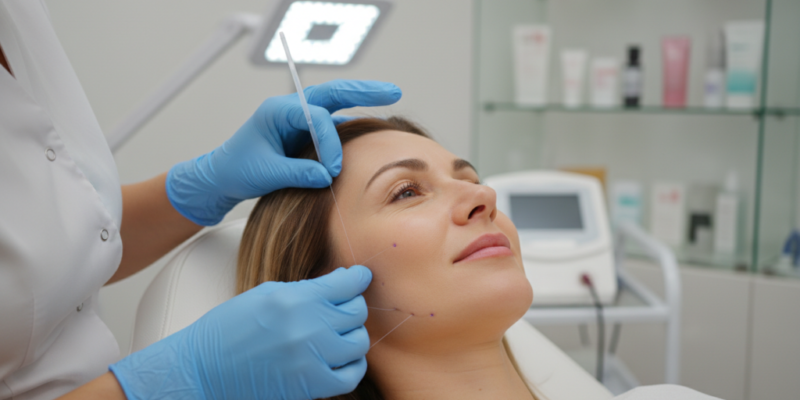
Thread lifts represent a significant advancement in aesthetic medicine, utilizing biocompatible sutures to create immediate lifting effects while stimulating long-term collagen production. The procedure involves inserting specially designed threads beneath the skin through tiny entry points, then positioning them to lift sagging tissue and create more defined facial contours.
Here’s what makes thread lifts unique: they work on two levels. First, the threads create immediate mechanical lifting by repositioning displaced facial tissue. Second, the body’s natural healing response to the threads triggers collagen synthesis around the insertion sites, gradually improving skin texture and firmness over several months.
Types of Threads Used in Lifting Procedures
Several thread types are available, each designed for specific lifting needs:
- PDO (Polydioxanone) Threads: The most common type, these smooth or barbed threads dissolve over 6-8 months while stimulating collagen production
- PLLA (Poly-L-Lactic Acid) Threads: These provide longer-lasting results, typically maintaining effects for 12-18 months
- PCL (Polycaprolactone) Threads: The newest option, offering extended longevity with results lasting up to 2 years
The choice of thread type depends on your skin condition, desired results, and the specific areas being treated. A board-certified physician can determine which option best suits your individual needs during consultation.
Ideal Candidates for Thread Lift Procedures
Thread lifts work best for patients experiencing mild to moderate skin laxity who aren’t ready for surgical intervention. Most people don’t realize that thread lifts can address multiple concerns simultaneously, making them particularly appealing for busy professionals seeking efficient aesthetic solutions.
Best Results Are Seen in Patients With:
- Early signs of facial sagging, typically in their 30s to 50s
- Good skin elasticity and thickness
- Realistic expectations about non-surgical results
- Desire to avoid general anesthesia and lengthy recovery periods
- Specific concerns about jowls, cheeks, or brow positioning
However, thread lifts aren’t suitable for everyone. Patients with severe skin laxity, very thin skin, or those seeking dramatic transformation may be better candidates for surgical facelifts or other procedures.
The Thread Lift Procedure: What to Expect
The reality is that thread lifts are remarkably straightforward procedures when performed by experienced practitioners. The entire process typically takes 30-60 minutes, depending on the number of areas being treated.
Step-by-Step Process
Your treatment begins with thorough consultation and facial analysis. The physician marks insertion points and lift vectors based on your unique facial anatomy and aesthetic goals. Local anesthesia is applied to minimize discomfort during thread placement.
Using specialized needles or cannulas, the practitioner inserts threads along predetermined paths beneath the skin. The threads are then adjusted to achieve optimal lifting and positioning. Once placed correctly, excess thread material is trimmed, and the entry points are cleaned and protected.
This might surprise you: most patients experience only mild discomfort during the procedure, often describing it as similar to getting dental work done. The use of local anesthesia and precise technique minimizes pain and tissue trauma.
Recovery and Downtime
One of thread lifts’ biggest advantages is the minimal recovery period. Most patients return to work within 24-48 hours, though some temporary side effects are normal:
- Mild swelling and bruising that typically resolves within a week
- Temporary dimpling or puckering that smooths out as tissues settle
- Slight discomfort or tightness in treated areas
- Minor restrictions on facial expressions and sleeping positions for the first few days
Here’s what works for optimal recovery: following post-procedure instructions carefully, avoiding strenuous exercise for the first week, and sleeping with your head elevated for several nights to minimize swelling.

Thread Lift Results: Timeline and Longevity
Thread lift results appear in phases, which often surprises first-time patients. Immediate lifting effects are visible right after the procedure, though some initial results may seem overcorrected due to swelling and tissue manipulation.
Result Timeline
The first two weeks show initial lifting with gradual reduction of swelling. By month one, you’ll see more natural-looking lift as tissues settle into their new positions. The real magic happens between months two and six, when collagen production peaks, creating improved skin texture and firmness that enhances the mechanical lifting effects.
Results typically last 12-18 months for most thread types, though individual factors like skin quality, lifestyle, and thread type influence longevity. Some patients choose to have touch-up procedures every 12-15 months to maintain optimal results.
Comparing Thread Lifts to Other Anti-Aging Options
Understanding where thread lifts fit in the spectrum of anti-aging treatments helps set appropriate expectations and treatment timing.
Thread Lifts vs. Surgical Facelifts
Surgical facelifts provide more dramatic and longer-lasting results, particularly for patients with significant skin laxity. However, they require general anesthesia, extended downtime (2-4 weeks), and carry higher risks of complications. Thread lifts offer a compromise: moderate improvement with minimal downtime and lower risk profiles.
Thread Lifts vs. Injectable Treatments
Dermal fillers and neurotoxins excel at addressing specific concerns like volume loss and dynamic wrinkles but don’t provide the mechanical lifting that threads offer. Many patients combine these treatments for complete facial rejuvenation, using threads for lifting and injectables for volume and smoothing.
Thread Lifts vs. Energy-Based Devices
Radiofrequency, ultrasound, and laser treatments focus primarily on skin tightening through collagen stimulation. While effective for mild skin laxity, they don’t provide the immediate lifting effects that threads deliver. The combination of threads with energy devices can enhance and prolong results.
Potential Risks and Complications
Like all medical procedures, thread lifts carry some risks, though serious complications are rare when performed by qualified practitioners. Here’s the thing: most side effects are temporary and resolve without intervention.
Common Side Effects
- Temporary swelling, bruising, and tenderness
- Minor asymmetry that typically evens out as healing progresses
- Visible or palpable threads under thin skin
- Temporary dimpling or skin irregularities
Rare but Serious Complications
Infection, though uncommon, requires prompt treatment with antibiotics. Thread migration or extrusion may occur if threads aren’t placed properly or if patients don’t follow post-care instructions. Nerve injury is extremely rare but possible if threads are placed incorrectly near facial nerve pathways.
Most businesses miss this crucial point: the practitioner’s experience and training significantly impact both results and safety. Board-certified physicians with extensive thread lift experience have much lower complication rates than less qualified providers.

Maximizing Your Thread Lift Results
Getting the most from your thread lift investment requires active participation in both the selection process and post-treatment care.
Choosing the Right Provider
Provider selection is absolutely essential for thread lift success. Look for board-certified dermatologists or plastic surgeons with specific thread lift training and experience. Ask to see before-and-after photos of similar cases and inquire about their complication rates and management protocols.
Pre-Treatment Preparation
Stop taking blood-thinning medications and supplements (with physician approval) at least a week before your procedure. Avoid alcohol for several days prior to treatment. Schedule your procedure when you can take a few days off for initial recovery.
Post-Treatment Care
Follow your provider’s specific instructions, but general guidelines include sleeping with your head elevated, avoiding strenuous exercise for a week, and being gentle with facial cleansing and skincare routines. Don’t massage treated areas unless specifically instructed by your practitioner.
Cost Considerations and Value Assessment
Thread lift costs vary based on the number of threads used, treatment areas, geographic location, and provider expertise. While less expensive than surgical facelifts, thread lifts represent a significant investment that should be evaluated based on expected results and longevity.
Consider the total cost of ownership: initial treatment plus potential touch-ups over time. Many patients find that thread lifts offer excellent value by delaying the need for more invasive procedures while providing meaningful aesthetic improvement with minimal life disruption.
Future Developments in Thread Lift Technology
Thread lift technology continues evolving with new thread materials, insertion techniques, and combination approaches. Recent developments include threads with enhanced gripping capabilities, longer-lasting materials, and specialized designs for different facial areas.
Research into growth factor-coated threads and combination treatments with regenerative medicine shows promise for even better and longer-lasting results. The field is moving toward more personalized approaches based on individual skin characteristics and aging patterns.
Making the Decision: Is a Thread Lift Right for You?
Thread lifts work best for patients seeking moderate improvement without surgical commitment. They’re ideal for busy professionals who can’t take extended time off for recovery but want to address early signs of facial aging proactively.
Consider thread lifts if you’re bothered by sagging cheeks, jowls, or brow area but aren’t ready for surgery. They’re also excellent options for patients who want to test aesthetic procedures with lower risk and commitment levels.
However, if you have severe skin laxity or want dramatic transformation, surgical options may be more appropriate. A thorough consultation with a qualified practitioner can help determine whether thread lifts align with your goals and expectations.
Thread lifts represent a significant advancement in non-surgical facial rejuvenation, offering patients an effective middle ground between topical treatments and surgical procedures. When performed by experienced practitioners using appropriate techniques and thread types, they can provide natural-looking lifting effects with minimal downtime and risk. At Beyond Aesthetics, our board-certified physician brings over 25 years of experience to every thread lift procedure, ensuring you receive expert care with personalized treatment plans designed to achieve your aesthetic goals safely and effectively.