
Your body has a way of sending signals when something is off — and hormonal imbalance is no exception. For millions of women, the symptoms creep in gradually: disrupted sleep, unexpected mood swings, a libido that seems to have quietly packed its bags. The challenge is that these signs are easy to dismiss as “just aging” or stress. But here’s the thing — they don’t have to be your new normal, and understanding when hormone replacement therapy (HRT) might help could change everything.

Understanding Hormone Replacement Therapy
Hormone replacement therapy is a medical treatment designed to restore hormones that your body produces in lower quantities as you age. Most commonly associated with menopause management, HRT replenishes declining levels of estrogen, progesterone, and sometimes testosterone to help relieve a wide range of symptoms that significantly affect quality of life.
It’s worth noting that HRT isn’t a one-size-fits-all solution. The type, dosage, and delivery method are tailored to each individual’s health profile, symptoms, and personal goals. That’s exactly why it’s so important to consult with a board-certified physician — someone who can assess your full picture rather than simply treating isolated symptoms.
The reality is that many women suffer through hormonal changes for years without realizing there are effective, evidence-based options available to them. Let’s look at the key signs your body might be telling you it’s time to have that conversation.
The Most Common Signs You May Need Hormone Replacement Therapy
1. Persistent Hot Flashes and Night Sweats
Hot flashes are perhaps the most widely recognized symptom of hormonal decline — and for good reason. Roughly 75% of women going through menopause experience them. These sudden waves of heat, often accompanied by flushing skin and perspiration, can last anywhere from a few seconds to several minutes.
Night sweats are essentially hot flashes that occur while you sleep. You wake up drenched, your heart racing, your sleep completely disrupted. Over time, this leads to chronic sleep deprivation, which then cascades into fatigue, brain fog, and irritability the next day.
If hot flashes are happening multiple times per day or night sweats are robbing you of restorative sleep on a regular basis, your estrogen levels are very likely the culprit. HRT has consistently shown strong effectiveness in reducing both the frequency and intensity of hot flashes — often dramatically so.
2. Irregular or Completely Absent Menstrual Cycles
Changes in your menstrual cycle are often one of the earliest indicators that your hormones are in flux. During perimenopause — the transitional phase before full menopause — many women notice:
- Periods becoming shorter or longer than usual
- Heavier or lighter bleeding than your baseline
- Irregular spacing between periods
- Spotting between periods
- Eventually, missed periods leading to the absence of menstruation altogether
These changes occur because the ovaries are producing less estrogen and progesterone, disrupting the hormonal rhythm that regulates your cycle. While irregular periods alone don’t automatically mean you need HRT, they do signal that a hormonal evaluation is warranted — especially if accompanied by other symptoms on this list.
3. Significant Mood Changes, Anxiety, and Depression
Here’s what many women don’t realize: the emotional turbulence they experience during perimenopause and menopause isn’t purely psychological — it has a very real physiological basis. Estrogen directly influences the production and regulation of serotonin and dopamine, the brain’s primary mood-stabilizing neurotransmitters.
When estrogen levels drop, so does your brain’s chemical equilibrium. This can manifest as:
- Increased irritability or mood swings that feel out of character
- Heightened anxiety, often without a clear trigger
- Feelings of sadness or low mood that don’t seem to lift
- A reduced ability to handle everyday stress
- A general sense of emotional flatness or disconnection
If you’ve noticed a shift in your emotional baseline — particularly if it coincides with other physical symptoms — it’s worth discussing with a physician whether hormonal changes may be contributing. HRT can have a meaningful positive impact on mood-related symptoms for many women.
4. Sleep Disturbances Beyond Night Sweats
Even without the presence of night sweats, hormonal changes can directly interfere with your ability to fall asleep and stay asleep. Progesterone, in particular, has a natural sedative quality — it helps calm the nervous system and supports deep, restorative sleep. As progesterone levels decline, insomnia often becomes a persistent companion.
Women experiencing hormonal sleep disruption often report:
- Difficulty falling asleep despite feeling tired
- Waking frequently in the night without clear reason
- Early morning awakening and an inability to fall back asleep
- Unrefreshing sleep — waking up as tired as when you went to bed
Chronic sleep deprivation affects everything: cognitive function, immune health, metabolism, cardiovascular health, and emotional resilience. If sleep issues are becoming the norm rather than the exception, it’s an important sign that your hormonal health deserves a closer look.
5. Vaginal Dryness and Discomfort
This is one of the most common — and most under-discussed — symptoms of hormonal decline. Declining estrogen levels cause the tissues of the vaginal wall to become thinner, drier, and less elastic, a condition clinically referred to as vaginal atrophy or genitourinary syndrome of menopause (GSM).
The effects can include:
- Persistent vaginal dryness and itching
- Discomfort or pain during sexual intercourse
- Increased susceptibility to vaginal infections
- Urinary symptoms, including urgency, frequency, and recurrent UTIs
Unlike some other menopausal symptoms that may improve over time, vaginal atrophy tends to worsen without treatment. The good news is that HRT — particularly localized estrogen therapy — is highly effective at reversing these changes and restoring comfort and sexual health.
6. Decreased Libido
A noticeable reduction in sexual desire is another frequently overlooked sign of hormonal imbalance. Both estrogen and testosterone play roles in sustaining libido in women. When these hormones decline, the result is often a diminished interest in sex — and sometimes, a reduced capacity for arousal and orgasm as well.
It’s important to distinguish this from situational shifts in desire caused by stress, relationship dynamics, or fatigue. A hormone-driven reduction in libido tends to be persistent, doesn’t respond much to changes in circumstance, and is often accompanied by other physical symptoms mentioned in this article.
For some women, HRT — particularly formulations that include testosterone — can meaningfully restore sexual desire and improve overall sexual satisfaction.
7. Cognitive Changes and Brain Fog
Estrogen plays a significant neuroprotective role in the brain. It supports memory, cognitive processing speed, and mental clarity. As estrogen levels decline during perimenopause and menopause, many women experience what’s commonly described as “brain fog.”
This can look like:
- Forgetting words mid-sentence or struggling to retrieve names
- Difficulty concentrating on tasks that used to come easily
- Mental fatigue, even after adequate rest
- A general sense that your thinking feels “slower” or less sharp
These cognitive changes are real, they’re common, and they’re not something to simply accept. Research suggests that starting HRT earlier in the menopausal transition may have a protective effect on cognitive health over time.
8. Unexplained Weight Gain, Particularly Around the Midsection
Many women notice that their body composition begins to shift as they move through perimenopause — even without significant changes to their diet or exercise habits. Declining estrogen triggers a redistribution of fat storage, shifting it from the hips and thighs toward the abdominal area. This visceral fat accumulation is associated not just with aesthetic concerns, but with increased cardiovascular and metabolic risk.
Additionally, hormonal changes can slow metabolism and reduce muscle mass, making it easier to gain weight and harder to lose it. While HRT isn’t a weight loss treatment, addressing the underlying hormonal imbalance can make it significantly easier to manage weight through healthy lifestyle habits.
9. Bone Loss and Increased Fracture Risk
This sign is less visible but arguably one of the most medically significant. Estrogen plays a critical role in maintaining bone density. As estrogen levels decline, bone resorption accelerates, increasing the risk of osteopenia and ultimately osteoporosis.
You might not notice bone loss directly — it’s typically detected through a bone density scan (DEXA scan) — but warning signs that suggest your risk may be elevated include:
- A family history of osteoporosis or hip fractures
- Loss of height over time
- Back pain without clear cause
- A fracture from a relatively minor fall or impact
HRT has been shown to significantly slow the rate of bone loss in postmenopausal women and can be a key component of a long-term bone health strategy when prescribed appropriately.
10. Skin and Hair Changes
Hormonal decline has a direct impact on skin health and hair quality — and these changes are often what prompt women to seek medical evaluation in the first place. Estrogen stimulates collagen production and supports the skin’s moisture retention capabilities. When levels drop, the results show up clearly:
- Skin becomes thinner, drier, and less elastic
- Fine lines and wrinkles deepen more rapidly
- Skin feels rough or lacks its previous luminosity
- Hair may become thinner, more brittle, or prone to shedding
- New facial hair may appear due to the relative increase in androgen activity
While aesthetic treatments can address some of these skin changes from the outside in, addressing the underlying hormonal cause works from the inside out — and often produces far more lasting results when combined with professional skin care.
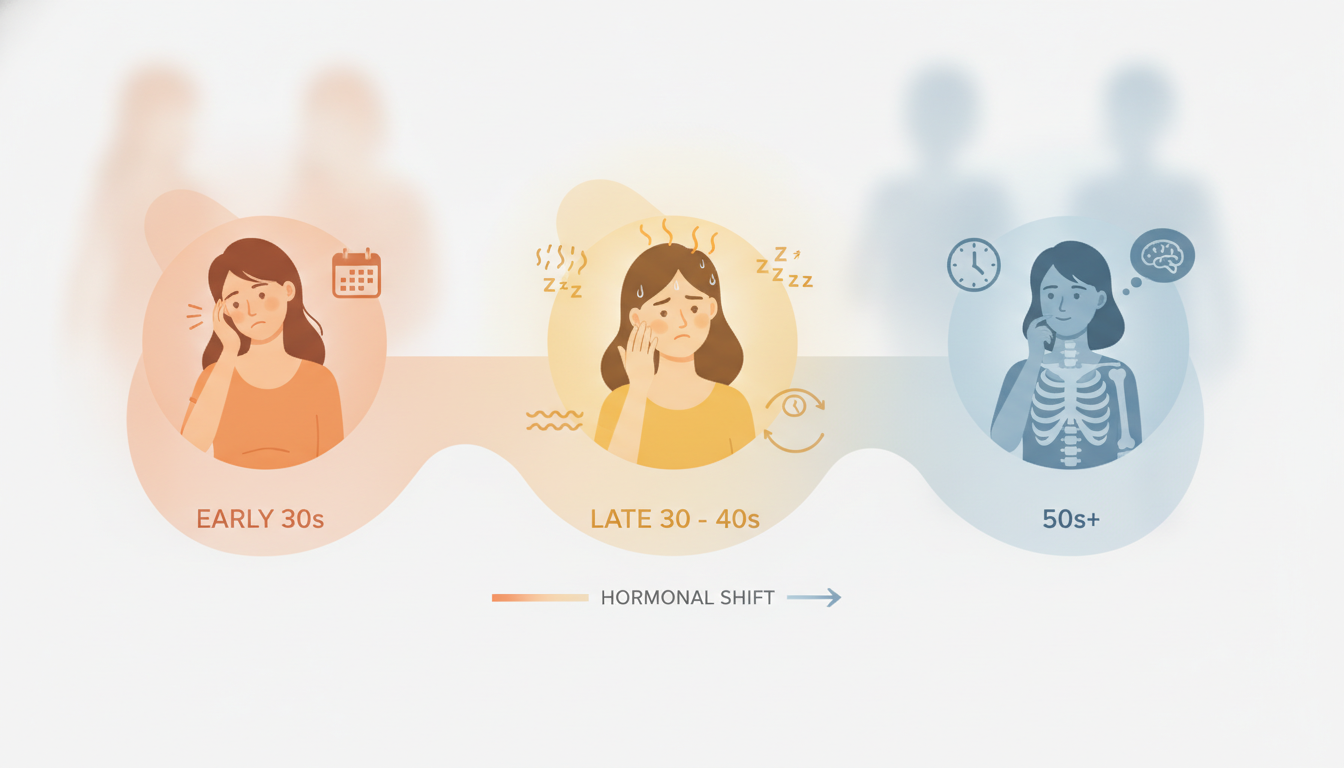
When Do These Signs Typically Appear?
Understanding the timeline of hormonal change helps contextualize when these symptoms are most likely to occur.
Perimenopause
This transitional phase typically begins in a woman’s mid-to-late 40s, though it can start earlier. It can last anywhere from a few years to a decade before menopause is officially reached. During this phase, estrogen and progesterone levels fluctuate unpredictably, which is why symptoms can be erratic and confusing.
Menopause
Menopause is clinically defined as the point at which a woman has gone 12 consecutive months without a menstrual period. The average age is around 51 in the United States. At this stage, the ovaries have largely ceased producing estrogen and progesterone.
Postmenopause
The years following menopause. While some symptoms like hot flashes may eventually diminish, others — particularly vaginal atrophy, bone loss, and cardiovascular risk — continue and often worsen without intervention.
It’s also worth noting that premature menopause (before age 40), surgical menopause following oophorectomy, or primary ovarian insufficiency can trigger all of these symptoms at a much earlier age, making early evaluation especially important in these cases.
Who Is a Good Candidate for HRT?
Not every woman experiencing these symptoms will be an ideal candidate for HRT — and that’s precisely why individualized medical evaluation matters so much. Generally, women who are most likely to benefit include those who:
- Are in perimenopause or menopause with moderate to severe symptoms
- Are under 60 or within 10 years of menopause onset (where the risk-benefit profile is most favorable)
- Are experiencing premature menopause or primary ovarian insufficiency
- Have documented bone density loss requiring intervention
- Have not found adequate relief from lifestyle modifications alone
On the other hand, HRT may not be the right fit for women with a personal history of certain hormone-sensitive cancers, active cardiovascular disease, unexplained vaginal bleeding, or blood clotting disorders. This is why a thorough medical history, physical examination, and relevant lab work are non-negotiable starting points.

What to Expect During an HRT Consultation
If you recognize several of the signs discussed in this article, the next step is scheduling a consultation with a qualified physician. Here’s what a thoughtful, personalized evaluation typically involves:
- Detailed symptom review: Your physician will take time to understand not just your symptoms, but their severity, duration, and impact on your daily life.
- Medical history assessment: This includes personal and family history of relevant conditions, current medications, and any prior hormonal treatments.
- Hormonal blood work: Lab tests measuring estrogen, progesterone, FSH (follicle-stimulating hormone), and sometimes testosterone provide objective data to complement your symptom profile.
- Discussion of treatment options: Based on your individual profile, your physician will walk through the available HRT options — oral pills, patches, gels, creams, or pellets — explaining the benefits and considerations of each.
- Ongoing monitoring: HRT isn’t a set-it-and-forget-it treatment. Regular follow-up ensures that dosages are optimized and that any emerging concerns are addressed promptly.
HRT and Skin Health: A Relationship Worth Understanding
For women who are already invested in their skin health, the connection between hormones and skin aging is an important piece of the puzzle. Estrogen is directly responsible for maintaining the structural integrity of the skin — it stimulates fibroblasts to produce collagen and elastin, and it helps retain the skin’s natural moisture.
When estrogen drops, collagen production can decline by as much as 30% in the first five years after menopause. The skin thins, loses firmness, and wrinkles form and deepen more rapidly. This is why many women notice an accelerated change in their skin’s appearance during this period — it’s not imagination, it’s biology.
Here’s what works well for many women: combining HRT with professional medical aesthetic treatments creates a synergistic effect. While HRT addresses the hormonal root cause, treatments like medical-grade skin rejuvenation, injectables, and laser therapies work on the structural level to further restore skin texture, tone, and elasticity. This inside-out and outside-in approach often delivers the most meaningful, lasting results.
Separating Fact from Fear: Addressing Common Concerns About HRT
It’s no secret that HRT has had a complicated public history. The 2002 Women’s Health Initiative (WHI) study generated significant alarm about potential links between HRT and breast cancer and cardiovascular disease. However, subsequent analysis has substantially revised the original conclusions, and today’s medical community has a much more nuanced understanding of HRT’s risk profile.
Key points worth knowing:
- The WHI study used a specific type of combined oral HRT in older postmenopausal women — findings don’t necessarily apply to all forms, all ages, or all health profiles.
- Newer formulations, including body-identical (bioidentical) hormones and transdermal delivery methods, generally have a more favorable safety profile.
- For most healthy women under 60 or within 10 years of menopause, the benefits of HRT typically outweigh the risks.
- Individual risk assessment is essential — which is exactly why working with a board-certified physician is non-negotiable.
The takeaway? Fear shouldn’t stand in the way of having an informed conversation with your doctor. The landscape of HRT has evolved considerably, and today’s options are more refined and individualized than ever before.
Lifestyle Factors That Work Alongside HRT
HRT works best as part of a broader commitment to your health. Several lifestyle factors can significantly influence how well you respond to treatment and how you feel overall during the menopausal transition:
- Regular physical activity: Particularly resistance training and weight-bearing exercise, which helps preserve bone density and muscle mass while supporting mood and metabolism.
- Anti-inflammatory diet: Prioritizing whole foods, healthy fats, lean proteins, and phytoestrogen-rich foods like soy, flaxseed, and legumes can provide nutritional support for hormonal health.
- Stress management: Chronic stress elevates cortisol, which can further disrupt hormonal balance. Mindfulness practices, adequate rest, and social connection all matter.
- Limiting alcohol and avoiding smoking: Both can worsen hormonal symptoms and increase health risks associated with the menopausal transition.
- Prioritizing sleep hygiene: Even when hormonal changes make sleep challenging, consistent sleep habits — regular bedtimes, a cool dark room, limiting screens — can make a meaningful difference.
Taking the Next Step
Recognizing the signs that you may need hormone replacement therapy is the first — and perhaps most important — step. Far too many women normalize their symptoms, quietly accepting disrupted sleep, emotional turbulence, and a diminished quality of life as inevitable consequences of aging. They don’t have to be.
Whether you’re experiencing a handful of the signs described above or nearly all of them, the path forward starts with a conversation with a physician who genuinely understands hormonal health and takes the time to evaluate your unique situation.
At Beyond Aesthetics, we bring together over 25 years of board-certified medical expertise with a deep commitment to helping women look and feel their best at every stage of life. Whether you’re exploring HRT for the first time or seeking a second opinion on your current treatment plan, our team offers same-day consultations and flexible scheduling to fit your life. We understand that hormonal health and skin health are deeply connected — and our approach reflects that. From expert hormone evaluation to medical-grade skin rejuvenation treatments, everything is managed under careful physician supervision, giving you confidence that your care is genuinely personalized.
Your body’s signals deserve to be heard. Don’t wait — take the first step toward feeling like yourself again.