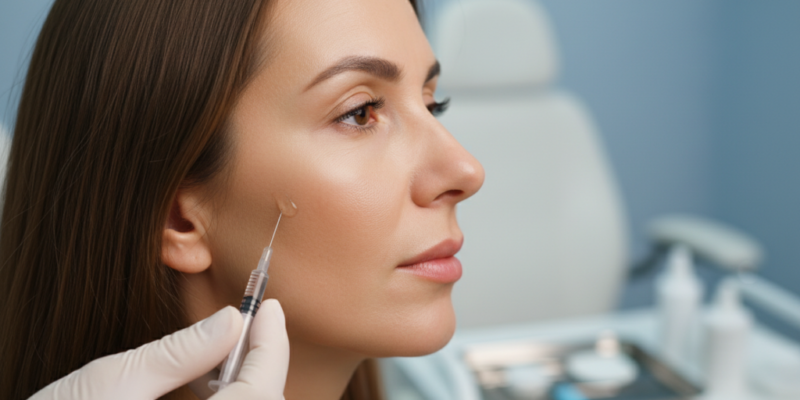
Nearly 3.4 million Americans chose dermal filler treatments in 2020, with cheek augmentation leading as one of the most transformative non-surgical procedures available. The strategic placement of dermal fillers in the cheek area doesn’t just add volume—it creates a lifting effect that can take years off your appearance while enhancing your natural bone structure.

Understanding Cheek Volume Loss and Aging
As we age, our faces undergo predictable changes that affect our overall appearance. The cheeks, in particular, lose volume due to several factors working together over time.
The Science Behind Facial Volume Loss
Your cheeks naturally lose volume through a combination of collagen breakdown, fat pad displacement, and bone remodeling. Here’s what happens:
- Collagen depletion: We lose approximately 1% of our collagen each year after age 25
- Fat pad migration: The buccal fat pads that give cheeks their youthful fullness begin to descend
- Bone resorption: The underlying bone structure gradually changes, reducing the foundation for soft tissues
- Skin elasticity loss: Reduced elastin production leads to sagging and hollow appearance
This might surprise you—the changes often start in your late twenties, though they become more noticeable in your forties and beyond.
Signs You’re a Candidate for Cheek Augmentation
Recognizing when cheek augmentation could benefit you isn’t always obvious. Here are the key indicators:
- Flat or sunken appearance in the mid-face area
- More prominent nasolabial folds (smile lines)
- Loss of definition along the cheekbone
- Tired or aged appearance even when well-rested
- Desire for more defined facial contours
How Dermal Fillers Restore Cheek Volume
Dermal fillers work by replacing lost volume and providing structural support to the cheek area. The process goes beyond simply filling hollow spaces—it’s about strategic enhancement that works with your natural anatomy.
Types of Fillers Used for Cheek Augmentation
Not all dermal fillers are created equal. For cheek augmentation, specific types work better than others:
Hyaluronic Acid Fillers
These remain the gold standard for cheek augmentation. Popular options include:
- Juvederm Voluma: Specifically designed for cheek volume, lasting up to two years
- Restylane Lyft: Provides excellent lift and contouring
- Sculptra: Stimulates natural collagen production for gradual, long-lasting results
Why Hyaluronic Acid Works Best
Here’s what makes hyaluronic acid ideal for cheeks:
- Naturally occurs in your body, reducing reaction risk
- Provides immediate results that improve over time
- Can be adjusted or dissolved if needed
- Integrates smoothly with existing tissues
- Attracts and holds moisture for natural-looking fullness
The Cheek Augmentation Treatment Process
Understanding what to expect during your treatment helps ensure the best possible results and reduces anxiety about the procedure.
Initial Consultation and Assessment
A thorough consultation is essential for successful cheek augmentation. During this appointment, your provider will:
- Analyze your facial structure and proportions
- Discuss your aesthetic goals and expectations
- Review your medical history and current medications
- Explain the procedure and potential outcomes
- Create a customized treatment plan
Treatment Day: What Happens
The actual procedure typically takes 30-45 minutes. Here’s the step-by-step process:
- Preparation: Your face is cleaned and marked for injection points
- Numbing: Topical anesthetic or ice may be applied for comfort
- Injection: Filler is carefully placed using specialized techniques
- Sculpting: Your provider shapes and molds the filler for optimal results
- Assessment: Final adjustments are made to ensure symmetry
Advanced Injection Techniques
The technique used for injection significantly impacts your results. Experienced practitioners employ several methods:
Deep Plane Injection
This technique places filler deep on the bone, creating a strong foundation for natural-looking lift.
Layered Approach
Multiple layers of filler are placed at different depths to mimic natural tissue structure.
Cannula vs. Needle Technique
Many providers now use blunt-tip cannulas, which offer several advantages:
- Reduced bruising and swelling
- More even distribution of product
- Lower risk of vascular complications
- More comfortable treatment experience

Expected Results and Timeline
Managing expectations is crucial for satisfaction with your cheek augmentation results.
Immediate vs. Final Results
You’ll see immediate volume enhancement, but your final results develop over time:
- Day 1: Visible volume increase with some swelling
- Week 1: Swelling subsides, more natural appearance emerges
- Month 1: Filler settles and integrates with tissues
- Months 2-3: Final results become apparent
How Long Results Last
The longevity of your cheek augmentation depends on several factors:
- Type of filler used (12-24 months for most hyaluronic acid fillers)
- Your individual metabolism
- Lifestyle factors like sun exposure and smoking
- The amount of product used
- Your age and skin condition
Potential Side Effects and Risks
While cheek augmentation with dermal fillers is generally safe, it’s important to understand potential risks and how to minimize them.
Common Side Effects
Most side effects are mild and temporary:
- Swelling at injection sites (typically resolves in 24-48 hours)
- Mild bruising
- Temporary tenderness
- Slight asymmetry that resolves as swelling subsides
Rare but Serious Complications
While uncommon, these risks require immediate medical attention:
- Vascular occlusion (blocked blood vessel)
- Infection at injection sites
- Allergic reactions
- Granuloma formation
Minimizing Risk Through Provider Selection
The reality is that your provider’s experience and training significantly impact your safety and results. Look for:
- Board certification in dermatology or plastic surgery
- Extensive experience with facial fillers
- Proper medical facility and emergency protocols
- Before-and-after photos of actual patients
- Transparent discussion of risks and alternatives
Aftercare and Maintenance
Proper aftercare ensures optimal results and reduces the risk of complications.
Immediate Post-Treatment Care
For the first 24-48 hours after treatment:
- Apply ice packs for 10-15 minutes at a time to reduce swelling
- Avoid strenuous exercise and activities that increase blood flow
- Sleep with your head elevated
- Avoid touching or massaging the treated area
- Stay hydrated and avoid alcohol
Long-Term Maintenance
To maximize the longevity of your results:
- Use broad-spectrum sunscreen daily
- Maintain a consistent skincare routine
- Stay well-hydrated
- Consider regular touch-up treatments
- Follow a healthy lifestyle

Cost Considerations and Value
Understanding the investment involved helps you make an informed decision about cheek augmentation.
Factors Affecting Cost
Several variables influence the total cost of your treatment:
- Geographic location and local market rates
- Provider’s experience and credentials
- Type and amount of filler used
- Facility fees and additional services
- Whether touch-ups are included
Comparing Value vs. Price
While cost is important, consider these value factors:
- Provider expertise and safety record
- Quality of products used
- Comprehensive consultation and follow-up care
- Facility standards and accreditation
- Results longevity and satisfaction rates
Alternatives to Consider
Cheek augmentation with dermal fillers isn’t the only option for restoring facial volume.
Non-Surgical Alternatives
- Thread lifts: Provide lifting without adding volume
- Ultherapy: Uses ultrasound to tighten and lift skin
- Radiofrequency treatments: Stimulate collagen production
- Combination treatments: Multiple modalities for complete rejuvenation
Surgical Options
For more dramatic changes, surgical procedures may be considered:
- Cheek implants for permanent volume enhancement
- Facelift procedures for complete facial rejuvenation
- Fat transfer using your own body fat
Choosing the Right Provider
Your provider choice is the most important factor in achieving safe, natural-looking results.
Questions to Ask During Consultation
Don’t hesitate to ask these important questions:
- What is your training and experience with dermal fillers?
- How many cheek augmentation procedures do you perform monthly?
- What type of filler do you recommend for my specific needs?
- Can you show me before-and-after photos of similar cases?
- What happens if I’m not satisfied with the results?
- How do you handle complications if they arise?
Red Flags to Avoid
Be cautious of providers who:
- Offer significantly below-market pricing
- Pressure you to decide immediately
- Cannot provide proper credentials
- Don’t discuss risks and alternatives
- Don’t have proper medical facilities
- Promise unrealistic results
Conclusion
Cheek augmentation with dermal fillers offers an effective, non-surgical solution for restoring youthful volume and definition to your face. When performed by an experienced provider using quality products, the procedure can deliver natural-looking results that enhance your features while maintaining your unique facial characteristics.
The key to successful cheek augmentation lies in choosing a qualified provider who understands facial anatomy and has extensive experience with injectable treatments. Here’s the thing—the difference between good results and great results often comes down to the subtle artistry and medical expertise your provider brings to the treatment.
If you’re considering cheek augmentation, take time to research providers thoroughly and schedule consultations to discuss your goals and expectations. Remember that this investment in your appearance should prioritize safety and natural-looking results over price alone.
At Beyond Aesthetics, our board-certified physician brings over 25 years of medical experience to every treatment, ensuring that your cheek augmentation is performed with the highest standards of safety and artistry. We offer same-day consultations with flexible scheduling to help you begin your journey toward renewed confidence and a more youthful appearance.