
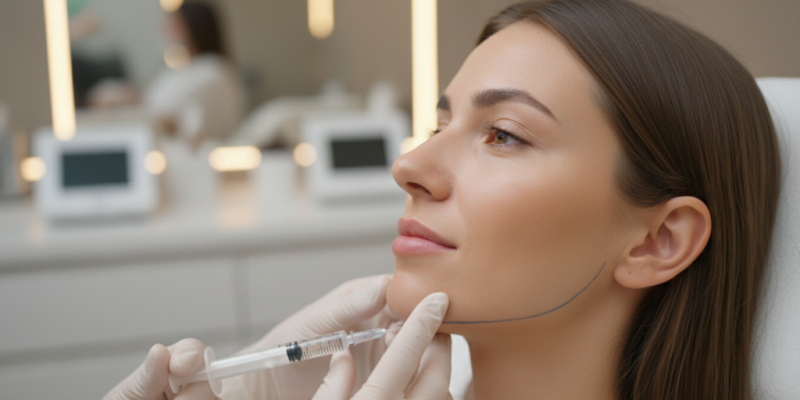
A sharply defined jawline commands attention in ways that subtle changes never could. While genetics determine your bone structure, modern dermal filler techniques can enhance and sculpt your natural contours to create the bold, confident profile you’ve always wanted. The transformation isn’t just physical—it’s about reclaiming the strength your face was meant to project.
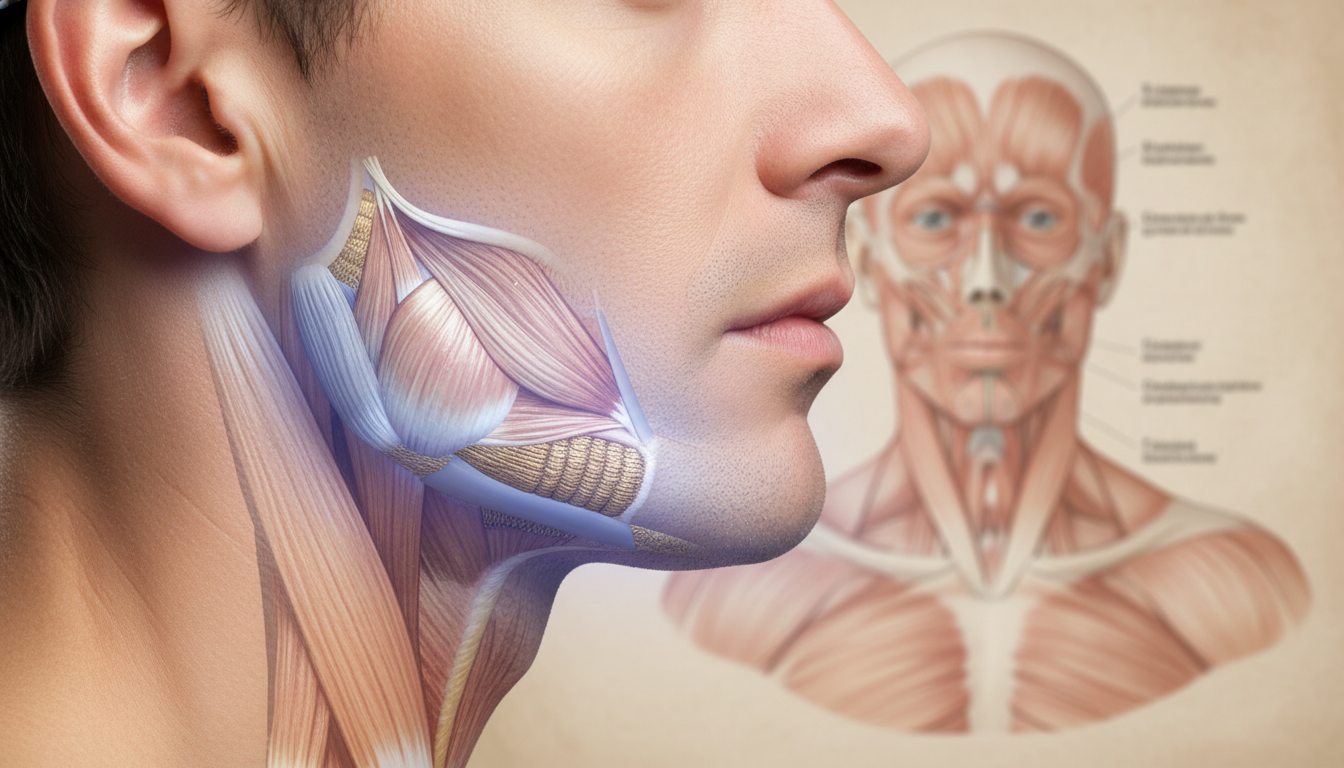
Understanding Jawline Anatomy and Aesthetic Goals
Your jawline’s aesthetic appeal depends on several key factors that work together to create an attractive profile. The mandible, or lower jaw bone, provides the foundation, but soft tissue volume, skin elasticity, and fat distribution all play crucial roles in how defined your jawline appears.
Here’s what makes a jawline look naturally attractive:
- A clear transition from the neck to the jaw
- Balanced proportions with the rest of your facial features
- Smooth, continuous lines from ear to chin
- Adequate projection that creates subtle shadowing
- Symmetry between the left and right sides
As we age, several changes can soften or blur these defining characteristics. Collagen production decreases, leading to skin laxity. Fat pads shift downward, creating jowls. Bone resorption can reduce the jaw’s natural projection. These changes don’t happen overnight, but their cumulative effect can significantly impact your profile’s definition.
The Role of Facial Harmony
Effective jawline contouring isn’t about creating the most dramatic change possible—it’s about enhancing your natural features in a way that complements your entire face. A skilled practitioner considers your cheekbone height, chin projection, and overall facial proportions when planning your treatment.
This might surprise you: sometimes the most successful jawline treatments involve subtle adjustments that create the illusion of more dramatic change. The goal is always to look like the best version of yourself, not like someone else entirely.
Types of Dermal Fillers for Jawline Enhancement
Not all dermal fillers are created equal, especially when it comes to jawline contouring. The jaw area requires products that can provide structure, maintain their shape under muscle movement, and integrate naturally with your existing tissues.
Hyaluronic Acid Fillers
Hyaluronic acid (HA) fillers are the most commonly used products for jawline contouring. These gel-like substances attract and hold water, creating volume and structure while maintaining a natural feel. Different HA formulations offer varying degrees of firmness and longevity.
High-density HA fillers work particularly well for jawline enhancement because they:
- Provide substantial structural support
- Resist displacement during facial expressions
- Integrate smoothly with existing tissues
- Can be adjusted or dissolved if needed
- Typically last 12-18 months in the jaw area
Calcium Hydroxylapatite Fillers
These fillers contain microscopic calcium particles suspended in a gel carrier. They’re particularly effective for jawline contouring because they stimulate your body’s natural collagen production while providing immediate structural support.
The benefits include longer-lasting results—often 18-24 months—and a lifting effect that can improve mild to moderate skin laxity along the jawline. However, these products can’t be dissolved like HA fillers, making precise injection technique essential.
Poly-L-Lactic Acid Fillers
These bio-stimulatory fillers work differently than traditional volume-replacing products. Instead of immediately adding bulk, they stimulate your body’s collagen production over several months. The results develop gradually and can last two years or more.
This approach works well for patients who want subtle, natural-looking enhancement and don’t mind waiting for full results to develop.
The Jawline Contouring Procedure
Understanding what happens during your jawline contouring appointment helps you prepare and know what to expect. Here’s the reality: this isn’t a quick lunch-hour procedure, but rather a carefully planned treatment that requires skill and precision.
Initial Consultation and Assessment
Your provider begins by analyzing your facial structure from multiple angles. They’ll assess your bone structure, soft tissue volume, skin quality, and how your jaw moves during speech and expressions. Photos are typically taken to document your starting point and help plan the treatment.
During this assessment, your practitioner should discuss:
- Your aesthetic goals and expectations
- The most appropriate filler type for your needs
- How many treatment sessions you might need
- Potential risks and side effects
- Post-treatment care instructions
Treatment Planning and Marking
Before any injections begin, your provider maps out the injection points on your face. This planning phase is crucial for achieving symmetrical, natural-looking results. They’ll identify areas that need volume, points that require lifting, and regions where subtle contouring can enhance your natural bone structure.
Most jawline treatments focus on three main areas:
- The jaw angle: Where your jaw curves from vertical to horizontal, creating the corner of your jawline
- The jawline itself: The horizontal border that extends from the angle toward your chin
- The pre-jowl area: The space just in front of the jowls where volume loss can blur the jawline
The Injection Process
The actual injection process typically takes 30-45 minutes. Your provider uses a combination of techniques—sometimes needles, sometimes cannulas—depending on the specific areas being treated and the filler being used.
Here’s what works: starting conservatively and building up gradually. Experienced practitioners often inject in layers, allowing them to assess the developing contour and make adjustments as needed. You’ll be asked to move your jaw and make facial expressions during the treatment so your provider can see how the filler behaves with muscle movement.
What to Expect During Recovery
Recovery from jawline contouring is generally straightforward, but knowing what’s normal helps you heal optimally and recognize any concerning changes.
Immediate Post-Treatment Effects
Right after your treatment, you can expect some swelling and possibly minor bruising. The injected area may feel firm or tender to the touch. These effects are normal and typically resolve within a few days to a week.
You might notice that your jawline looks more pronounced immediately after treatment than it will once swelling subsides. Don’t panic—this is expected. The final results become apparent after about two weeks when all swelling has resolved and the filler has settled into its final position.
Managing Discomfort and Side Effects
Most patients experience minimal discomfort after jawline contouring, but there are steps you can take to minimize any issues:
- Apply ice for 10-15 minutes at a time during the first 24 hours
- Sleep with your head elevated for the first few nights
- Avoid strenuous exercise for 24-48 hours
- Stay hydrated and avoid excessive salt intake
- Don’t massage the treated area unless instructed by your provider
Timeline for Results
The evolution of your results follows a predictable pattern:
- Days 1-3: Maximum swelling and firmness
- Days 4-7: Swelling begins to subside, results become more apparent
- Weeks 2-4: Final results visible as filler integrates with tissues
- Months 2-6: Optimal results as any collagen stimulation effects develop

Potential Risks and How to Minimize Them
Like any cosmetic procedure, jawline contouring with fillers carries some risks. Understanding these potential complications and choosing an experienced provider significantly reduces your chances of experiencing problems.
Common Side Effects
Most side effects are mild and temporary:
- Swelling and bruising at injection sites
- Tenderness or firmness in the treated area
- Temporary asymmetry due to swelling
- Minor lumps or bumps that resolve as filler settles
Serious Complications
While rare, serious complications can occur. These include:
- Vascular compromise (blocking blood flow to tissues)
- Infection at injection sites
- Permanent asymmetry or irregularities
- Allergic reactions to filler materials
The key to avoiding these complications lies in choosing a qualified provider who understands facial anatomy and has extensive experience with jawline treatments.
Red Flags to Watch For
Contact your provider immediately if you experience:
- Severe pain that worsens rather than improves
- Skin that turns white, gray, or blue
- Signs of infection (increasing redness, warmth, pus)
- Vision changes or severe headaches
- Difficulty opening your mouth or chewing
Maintaining Your Results
Your investment in jawline contouring doesn’t end when you leave the treatment room. Proper maintenance helps extend your results and keep your profile looking its best.
Follow-Up Appointments
Most providers schedule a follow-up appointment 2-4 weeks after your initial treatment. This visit allows your practitioner to assess your results, address any concerns, and make minor adjustments if needed.
Some patients benefit from a touch-up treatment during this follow-up visit, especially if asymmetry becomes apparent after swelling resolves or if additional volume is needed to achieve optimal results.
Long-Term Maintenance
Dermal fillers are temporary, and maintenance treatments are necessary to preserve your results. The frequency depends on several factors:
- The type of filler used
- Your individual metabolism
- The amount of filler injected
- Your lifestyle and facial expressions
- Your age and skin quality
Most patients schedule maintenance treatments every 12-18 months, though some may need touch-ups sooner or can go longer between sessions.
Choosing the Right Provider
The success of your jawline contouring treatment depends heavily on your provider’s skill and experience. Here’s what to look for when making this important decision.
Qualifications and Training
Board certification in a relevant specialty—such as dermatology, plastic surgery, or facial plastic surgery—provides assurance that your provider has received proper training in facial anatomy and injection techniques.
Look for additional training in aesthetic procedures and ongoing education in the latest techniques and products. Many providers display their certifications and training credentials in their offices or on their websites.
Experience with Jawline Treatments
Ask potential providers about their specific experience with jawline contouring. How many treatments have they performed? Can they show you before and after photos of their work? Do they have experience treating patients with similar facial structures or aesthetic goals?
Most businesses miss this: the importance of seeing multiple examples of the provider’s work, not just their best results. A skilled practitioner should be able to show you a range of outcomes and explain their approach to different facial types.
Consultation Quality
A thorough consultation reveals a lot about a provider’s approach and expertise. During your consultation, your provider should:
- Listen carefully to your goals and concerns
- Perform a detailed analysis of your facial structure
- Explain their recommended treatment approach
- Discuss potential risks and alternatives
- Provide realistic expectations about results
- Answer all your questions thoroughly
Be wary of providers who rush through consultations, promise unrealistic results, or pressure you to book treatment immediately.
Cost Considerations and Value
Jawline contouring with fillers represents a significant investment, and understanding the factors that influence cost helps you make informed decisions about your treatment.
Factors Affecting Treatment Cost
Several variables influence the total cost of your jawline contouring:
- Geographic location and local market rates
- Provider’s experience and reputation
- Type and amount of filler needed
- Complexity of your treatment plan
- Facility fees and additional services
Remember that the cheapest option isn’t always the best value. Skilled providers who use high-quality products and take time to achieve optimal results may charge more, but they’re also less likely to require correction treatments or cause complications.
Planning for Maintenance
Factor maintenance treatments into your budget planning. While the initial treatment represents the largest investment, ongoing touch-ups are necessary to maintain your results. Many providers offer package deals or loyalty programs that can reduce the cost of maintenance treatments.

Alternative and Complementary Treatments
Dermal fillers aren’t the only option for enhancing your jawline. Understanding alternative treatments helps you make the best choice for your goals and situation.
Surgical Options
For patients with significant bone structure concerns or excess skin, surgical procedures might be more appropriate:
- Jaw implants: Permanent solution for enhancing bone structure
- Buccal fat removal: Creates more defined cheekbones and jawline
- Neck lifts: Address skin laxity that blurs the jawline
- Jawline liposuction: Remove excess fat to reveal underlying structure
Non-Surgical Alternatives
Several non-invasive treatments can complement or serve as alternatives to filler injections:
- Radiofrequency treatments: Tighten skin and stimulate collagen
- Ultrasound therapy: Lift and tighten without needles
- Thread lifts: Provide lifting with minimal downtime
- CoolSculpting: Reduce double chin fat
Combination Approaches
Many patients achieve optimal results by combining treatments. For example, you might use radiofrequency to tighten skin while adding filler for volume, or combine neck liposuction with strategic filler placement for comprehensive jawline enhancement.
Real Patient Experiences and Expectations
Understanding what real patients experience helps set realistic expectations for your own treatment journey.
Common Patient Concerns
Most patients worry about similar things before their first jawline treatment:
- Will the results look natural?
- How much discomfort should I expect?
- What if I don’t like the results?
- How long before I can return to normal activities?
- Will people notice I’ve had something done?
The reality is that well-executed jawline contouring should enhance your natural features without creating an obviously “done” appearance. Most patients report that people notice they look refreshed or more confident, but can’t pinpoint exactly what’s different.
Realistic Timeline Expectations
Here’s what works for most patients: planning your treatment timeline around important events or commitments. Allow at least two weeks before any major social or professional events to ensure swelling has completely resolved and results have settled.
Many patients describe the experience as initially feeling “aware” of the filler, particularly when chewing or making facial expressions. This sensation typically resolves within a few days as you adapt to the enhanced contours.
Making Your Decision
Deciding whether jawline contouring with fillers is right for you involves careful consideration of your goals, lifestyle, and expectations.
Ideal Candidates
The best candidates for jawline filler treatments typically:
- Have realistic expectations about results
- Want to enhance rather than completely change their appearance
- Have good overall health and skin quality
- Understand the temporary nature of filler treatments
- Are committed to proper aftercare and maintenance
When to Consider Alternatives
Fillers might not be the best choice if you:
- Have significant bone structure deficiencies
- Want permanent results
- Have extensive skin laxity
- Are pregnant or breastfeeding
- Have active infections or autoimmune conditions
An experienced provider can help you determine whether fillers align with your goals or if alternative treatments would be more appropriate.
The Future of Jawline Enhancement
The field of non-surgical facial contouring continues to evolve, with new products and techniques regularly emerging.
Emerging Technologies
Several promising developments are on the horizon:
- Longer-lasting filler formulations
- More precise injection techniques using imaging guidance
- Combination treatments that address multiple aging factors simultaneously
- Personalized treatment planning using 3D facial analysis
These advances promise to make jawline contouring even more effective and natural-looking while reducing treatment frequency and downtime.
Jawline contouring with dermal fillers offers a powerful way to enhance your natural bone structure and create the defined profile you’ve always wanted. The key to success lies in choosing an experienced provider, maintaining realistic expectations, and committing to proper aftercare and maintenance.
At Beyond Aesthetics, our board-certified physician brings over 25 years of experience to every treatment, ensuring you receive expert care in a medically supervised environment. We offer same-day consultations with flexible scheduling to help you take the first step toward achieving your aesthetic goals. Contact us today to discover how jawline contouring can enhance your natural beauty and boost your confidence.