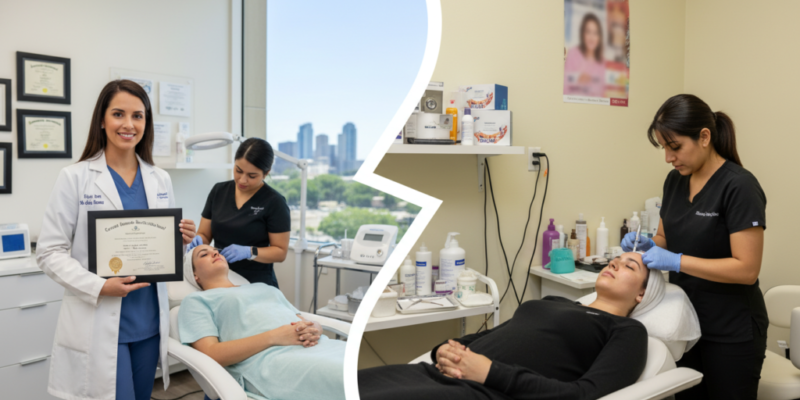
Nearly 40% of med spa treatments in Texas are performed at unlicensed facilities, putting patients at unnecessary risk. In Harlingen’s growing aesthetic medicine market, understanding the crucial difference between licensed and non-licensed practitioners isn’t just about credentials—it’s about your safety and treatment outcomes.

The Legal Framework: What Licensing Really Means
Medical spa licensing operates on multiple levels in Texas, creating a complex regulatory environment that many patients don’t fully understand. Here’s what you need to know about the credentials that matter.
State Medical Board Requirements
The Texas Medical Board requires that all medical procedures—even minimally invasive aesthetic treatments—be performed under physician supervision. This means a board-certified doctor must either perform the treatment directly or oversee qualified medical professionals who do.
Licensed facilities must meet strict standards for:
- Equipment sterilization and maintenance
- Staff training and certification
- Emergency protocols and safety procedures
- Patient record keeping and privacy protection
- Proper handling and storage of medications
Professional Licensing Requirements
Beyond facility licensing, individual practitioners must hold appropriate credentials. For aesthetic treatments, this typically includes:
- Physicians: Medical degree plus board certification in relevant specialty
- Nurse Practitioners: Advanced nursing degree and state certification
- Physician Assistants: PA degree and state licensing
- Registered Nurses: Nursing degree and active RN license
Each level of practitioner has specific scope limitations. For example, only physicians can perform certain laser treatments, while nurses may be restricted to specific injection procedures under direct supervision.
Red Flags: Identifying Unlicensed Operations
Unfortunately, not all facilities claiming to offer medical spa services operate legally. Here’s what to watch for when choosing a provider in Harlingen.
Warning Signs of Unlicensed Facilities
The reality is that unlicensed operations often market themselves professionally, making them difficult to spot. However, several red flags should raise immediate concerns:
- Reluctance to provide practitioner credentials upon request
- Prices significantly below market rates for similar treatments
- Performing treatments in non-medical settings (spas, salons, homes)
- Offering prescription treatments without physician consultation
- Unable to produce facility licensing documentation
- Staff unable to answer basic medical questions about procedures
The Esthetician vs. Medical Professional Distinction
This distinction causes significant confusion among patients. Licensed estheticians can perform certain skin treatments, but they cannot:
- Administer injectable treatments (Botox, dermal fillers)
- Operate medical-grade lasers
- Prescribe or dispense medications
- Perform procedures that penetrate beyond the epidermis
Many unlicensed facilities blur these lines, having estheticians perform procedures outside their legal scope of practice.
Safety Implications: Why Credentials Matter
The difference between licensed and unlicensed practitioners extends far beyond paperwork—it directly impacts your safety and treatment outcomes.
Medical Emergency Preparedness
Licensed medical facilities must maintain emergency protocols and equipment. When complications arise—and they can with any medical procedure—proper training and resources can be life-saving.
Consider these potential complications that require immediate medical intervention:
- Severe allergic reactions to injectable treatments
- Vascular complications from dermal filler placement
- Burns or scarring from improperly calibrated laser equipment
- Infections from non-sterile injection techniques
Unlicensed facilities often lack both the training and equipment necessary to handle these emergencies appropriately.
Treatment Efficacy and Long-term Outcomes
Beyond safety, licensing ensures practitioners have the medical knowledge necessary to achieve optimal results. Licensed professionals understand:
- Facial anatomy and injection techniques
- Proper dosing for different treatment areas
- How to customize treatments for individual skin types
- Contraindications and drug interactions
- Long-term effects and maintenance protocols
This expertise directly translates to better outcomes and fewer complications.

Verifying Credentials: Your Due Diligence Checklist
Before scheduling any aesthetic treatment, you should verify your provider’s credentials. Here’s your step-by-step verification process.
Online License Verification
Texas makes license verification straightforward through online databases:
- Texas Medical Board: Search physician licenses and disciplinary actions
- Texas Board of Nursing: Verify RN and NP credentials
- Department of State Health Services: Check facility licensing
Most people don’t realize these searches are free and provide immediate results. Don’t hesitate to verify credentials before your appointment.
Questions to Ask During Consultation
A reputable medical spa will welcome questions about credentials. Ask these specific questions:
- “Can you show me your medical license and board certification?”
- “Who will be performing my treatment, and what are their qualifications?”
- “Is there a physician on-site during my treatment?”
- “What emergency protocols do you have in place?”
- “Can you provide references from the Texas Medical Board?”
Licensed practitioners will answer these questions confidently and provide documentation when requested.
Treatment-Specific Licensing Requirements
Different aesthetic treatments have varying licensing requirements. Understanding these helps you make informed decisions about providers.
Injectable Treatments
Botox, dermal fillers, and other injectable treatments require the highest level of medical supervision. In Texas, only the following can legally administer these treatments:
- Board-certified physicians
- Nurse practitioners under physician supervision
- Physician assistants under physician supervision
- Registered nurses under direct physician supervision
The supervising physician must be on-site during treatment and available for immediate consultation.
Laser and Energy-Based Treatments
Laser treatments fall into different categories based on their invasiveness. Class IV medical lasers (used for most aesthetic procedures) require physician oversight and can only be operated by licensed medical professionals.
Here’s what works: Always verify that your laser technician holds appropriate medical licensing, not just manufacturer certification.
Chemical Peels and Advanced Skincare
While superficial chemical peels can be performed by licensed estheticians, medium and deep peels require medical supervision due to their potential for complications.
The Cost of Choosing Unlicensed Providers
The financial temptation of lower-cost unlicensed providers often backfires, resulting in higher long-term costs and health risks.
Hidden Financial Risks
Consider these potential additional costs from unlicensed treatment:
- Corrective procedures to fix botched treatments
- Medical treatment for complications or infections
- Lost time from work due to extended recovery
- Legal fees if pursuing malpractice claims
- Psychological counseling for traumatic experiences
These costs often exceed the initial savings by thousands of dollars.
Insurance and Liability Considerations
Licensed medical facilities carry malpractice insurance and operate under strict liability standards. Unlicensed providers often lack proper insurance coverage, leaving patients with limited recourse if complications occur.
Harlingen’s Medical Spa Landscape
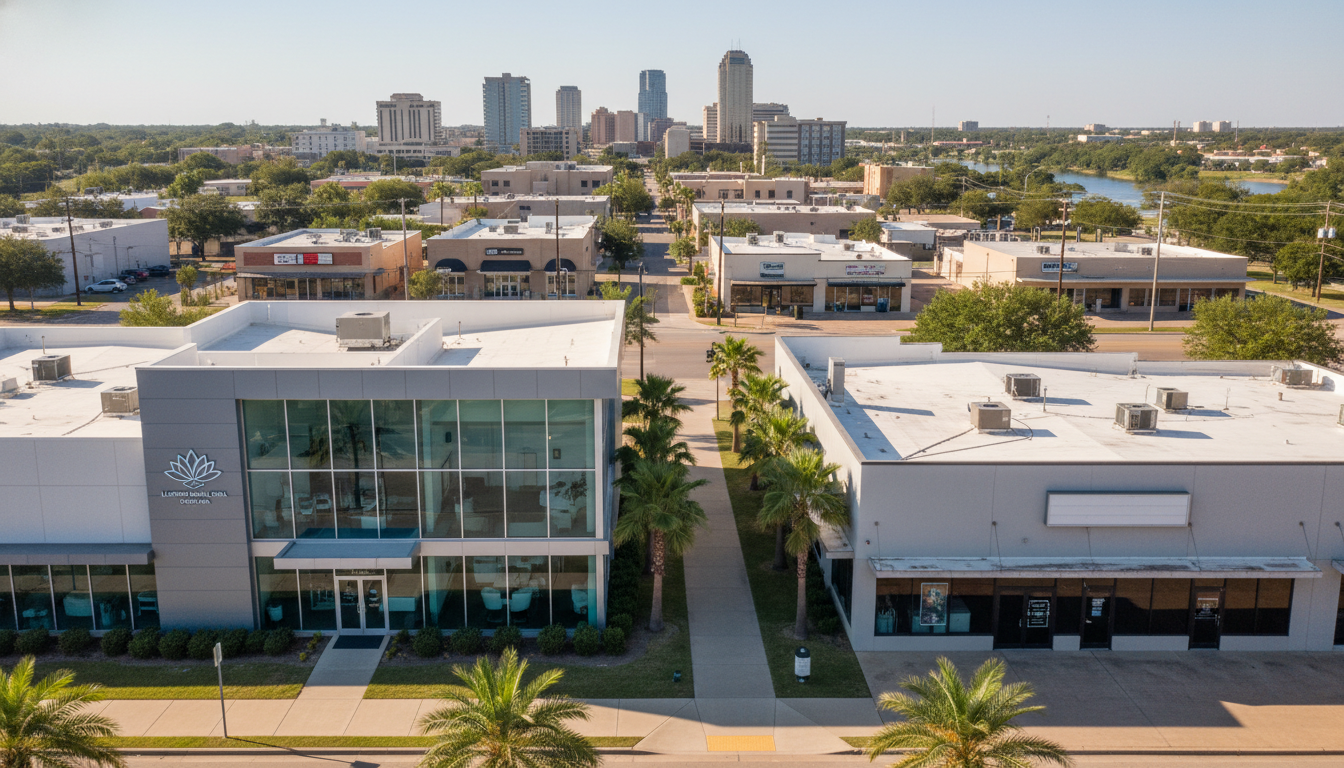
As Harlingen’s medical spa industry continues growing, understanding the local regulatory environment becomes increasingly important for patients.
Local Enforcement and Oversight
The Texas Medical Board actively investigates unlicensed medical practice, including aesthetic treatments. Recent enforcement actions in the Rio Grande Valley have resulted in significant penalties for unlicensed providers.
This regulatory environment protects patients but requires vigilance in choosing providers.
Building Relationships with Licensed Providers
Establishing care with a licensed medical spa offers long-term benefits beyond individual treatments:
- Coordinated treatment planning for optimal results
- Medical history tracking for safety and efficacy
- Access to the full spectrum of aesthetic treatments
- Emergency support and follow-up care
- Professional referrals for additional services
Making Your Decision: Questions for Self-Assessment
Before choosing a medical spa provider, honestly assess your priorities and risk tolerance:
- How important is cost versus safety in your decision-making?
- Do you have the time and resources to deal with potential complications?
- Are you comfortable with the legal protections offered by your chosen provider?
- Have you verified all credentials and licensing documentation?
- Does the facility meet your standards for cleanliness and professionalism?
Your answers should guide your provider selection process.
Conclusion
The choice between licensed and unlicensed medical spa providers isn’t just about credentials—it’s about protecting your health, safety, and investment in your appearance. Licensed facilities offer legal protections, medical expertise, and safety protocols that unlicensed providers simply can’t match.
When considering aesthetic treatments in Harlingen, take time to verify credentials, ask questions, and choose providers who prioritize your safety alongside your aesthetic goals. The few extra minutes spent on verification can prevent years of regret and complications.
At Beyond Aesthetics, our board-certified physician with over 25 years of experience ensures that every treatment meets the highest medical standards. We offer same-day consultations with flexible scheduling, allowing you to make informed decisions about your aesthetic care with complete confidence in our credentials and commitment to your safety.